The supplement sitting in your cabinet probably has a "third-party tested" claim on the label. So does the cheaper version next to it on the shelf. If both carry the same badge, why does one cost three times as much, and why should you care?
Third-party testing, as most supplement companies practice it, is a compliance ritual dressed up as a quality guarantee. The label tells you testing happened. It tells you almost nothing about what was actually tested, when, under what conditions, or whether the results are available for you to see.
Direct Answer
Conventional third-party testing falls short for health-conscious buyers because the process is designed to satisfy regulatory optics rather than consumer transparency. Most testing covers only a narrow slice of what matters: heavy metals or label claims, but rarely bioavailability, contaminant thresholds, or batch-specific results. Without batch-level disclosure, a "tested" label is a category claim, not a product guarantee.
Key Takeaways
- "Third-party tested" is a process claim, not a results claim. It tells you testing occurred, not what it found or how specific it was.
- Batch transparency is the real standard. Testing one production run doesn't protect you from a contaminated batch made six weeks later.
- Bioavailability is almost never part of conventional third-party testing, which means a product can pass every test and still not absorb properly in your body.
- The gap between what a label claims and what a certificate of analysis confirms is where most supplement quality problems hide.
- Demanding batch-specific Certificates of Analysis (COAs) before you buy is the single most effective filter for separating real quality from marketing.
What Does "Third-Party Tested" Actually Mean on a Supplement Label?
Third-party testing is the practice of sending a product to an independent laboratory for analysis, separate from the manufacturer's own quality checks. That's the definition. The problem is that the definition says nothing about scope, frequency, or accessibility.
In practice, "third-party tested" can mean a company sent one batch to a lab three years ago and has been reprinting that certification ever since. It can mean a lab checked whether the label's stated milligrams are present, but didn't screen for pesticide residue, heavy metals, or microbial contamination. It can mean testing happened at the ingredient level before manufacturing, not on the finished product you're actually swallowing.
The phrase is structurally ambiguous by design. There's no federal standard in the U.S. that defines what "third-party tested" must include before a company can print it on packaging.
That ambiguity isn't accidental. It's a feature of a regulatory environment in which the FDA classifies supplements as food rather than drugs, meaning pre-market approval isn't required. Companies can self-certify Good Manufacturing Practices (GMPs), and while third-party GMP audits exist, they evaluate the facility's processes, not whether a specific product is clean or potent.
Why Does Batch-Specific Testing Matter More Than a General Certification?
Here's the structural problem most buyers don't realize: a certification earned on one batch doesn't carry over to the next.
Raw ingredient sourcing changes. Suppliers get swapped. A facility might run a compliant batch in January and a contaminated one in March if an ingredient lot changes between runs. A general "third-party tested" certification doesn't catch that. Only batch-specific testing does.
Batch transparency means every production run carries its own Certificate of Analysis, and that COA is publicly accessible so you can match what you're holding in your hand to a specific test result. Without that, you're trusting a category, not a product.
Consider a common scenario: a buyer purchases a probiotic supplement because it carries a well-known third-party seal. The seal was earned on a batch produced during an annual audit cycle. The batch they actually received was manufactured four months later, after a supplier change. No new testing was conducted. The label is accurate. The product may not be.
This is why Etta Vita publishes batch-level transparency as a standard practice, not a premium feature. The COA you can access corresponds to the specific product in your order.
Is Bioavailability Ever Part of Standard Third-Party Testing?
Almost never. And this is the gap that costs you the most.
Bioavailability is the degree to which an active ingredient is absorbed and available for use in the body. A supplement can contain exactly the milligrams stated on the label, pass every contaminant screen, and still deliver almost none of its active compounds to your bloodstream if the form, delivery mechanism, or formulation is wrong.
Conventional third-party testing checks for presence and purity. It doesn't check for a function.
Magnesium oxide, for example, is cheap, stable, and shows up cleanly on a label claim test. It also has significantly lower absorption rates than forms such as magnesium glycinate or malate. A product can be "third-party tested and verified" at 400mg of magnesium while delivering a fraction of the physiological benefit of a better-formulated competitor at the same dose.
The supplement industry's dirty secret is that a product can pass every standard test and still not work. Bioavailability testing requires more sophisticated methodology and costs more. Most brands skip it entirely. Etta Vita's formulation approach starts with bioavailability as a design requirement, not an afterthought, which is why the form of each ingredient is as important as the dose.
The Transparency Gap Framework: How to Read What a Label Isn't Telling You
The Transparency Gap Framework is a three-question filter for evaluating whether a supplement's testing claims are meaningful or decorative.
Use it every time you see "third-party tested" on a label:
Question 1: Is the COA batch-specific and publicly accessible?
If you can't find a COA that matches the lot number on your bottle, the testing claim is a category statement, not a product guarantee. Pass it on or contact the company directly.
Question 2: What was actually tested?
Heavy metals? Label claim accuracy? Microbial contamination? Pesticides? Solvents? A real COA specifies the analytes. A vague certification doesn't. The narrower the test scope, the less it protects you.
Question 3: Was the finished product tested, or just the raw ingredients?
Ingredient-level testing and finished-product testing are not the same thing. Contamination can occur during manufacturing. Only finished-product testing catches that.
Use this framework when: you're evaluating a new supplement brand, comparing two products with similar claims, or trying to understand why one product costs significantly more.
Don't use it as a reason to dismiss all testing entirely. Testing done well is genuinely protective. The framework helps you tell the difference.
What Happens When You Apply Real Transparency Standards?
If you're buying supplements for gut health or metabolic support, the stakes of this aren't abstract.
A typical case: someone managing a gut microbiome protocol adds a probiotic whose label lists a CFU count. Conventional testing confirms the CFU count at the time of manufacture. What it doesn't confirm is viability at the time of consumption, which depends on storage conditions, delivery mechanism, and whether the strains can survive stomach acid to reach the colon. None of those factors appear on a standard COA.
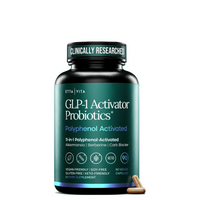
Etta Vita's GLP-1 Activator Probiotics are formulated with strain survivability and delivery as core design considerations, not secondary concerns. The testing process includes finished-product verification, not just raw ingredient sign-off.
If you've been taking supplements that carry testing claims but haven't seen the actual COAs, now is a good time to look. Etta Vita makes that search straightforward.
Conventional Testing vs. Batch-Transparent Testing: What the Difference Looks Like
| What's Being Evaluated | Conventional "Third-Party Tested" | Batch-Transparent Testing |
|---|---|---|
| Scope of testing | Often limited to label claim accuracy | Heavy metals, contaminants, potency, and purity |
| Frequency | Periodic, often annual or per certification cycle | Every production batch |
| Consumer access to results | Rarely public; certification logo only | COA accessible by lot number |
| Bioavailability assessed | Almost never | Considered in formulation design |
| Finished product vs. ingredients | Often ingredient-level only | Finished product tested |
| What it actually protects | Regulatory compliance | The specific product you receive |
The table above isn't about expensive vs. cheap. It's about what the testing was designed to do. Compliance testing protects the brand. Batch-transparent testing protects you.
Who This Approach Isn't For
Honest answer: if you're buying supplements primarily based on price and you're not experiencing any specific health concerns you're trying to address, the depth of testing documentation probably won't matter to you in the short term.
This level of scrutiny matters most when you're managing something specific. Gut dysbiosis, metabolic dysfunction, a condition that responds to particular nutrients, or a body that's already been through the cycle of trying supplements that didn't work. The cost of the wrong product isn't just the money spent. It's the time lost and the continued problem.
Etta Vita isn't the right fit if you want the cheapest option in a category. It's the right fit if you've decided that what you put in your body should be verifiable down to the batch.
FAQ
How do I actually verify that a supplement's third-party testing is legitimate?
Ask for the Certificate of Analysis by lot number, not just a certification logo. A real COA will list the specific analytes tested, the testing laboratory's name and accreditation, and the batch or lot number that matches your product. If a company can't or won't provide that, the testing claim is marketing, not documentation.
Does a USP or NSF certification mean a supplement is fully safe and effective?
These certifications are valuable and more rigorous than many alternatives, but they primarily verify that what's on the label is in the bottle and that the product doesn't contain harmful levels of specific contaminants. They don't assess bioavailability, strain viability in probiotics, or whether the formulation is designed to actually work in your body. They're a floor, not a ceiling.
Why do some high-quality supplements cost significantly more than store-brand versions?
The cost difference usually reflects formulation choices and testing frequency. Using a more bioavailable form of an ingredient costs more at the raw material level. Testing every batch costs more than testing once per certification cycle. Sourcing from verified suppliers with transparent supply chains costs more than buying commodity ingredients. You're paying for the decisions that happen before the product reaches you.
Can a supplement pass third-party testing and still not work?
Yes, and this is the most important thing to understand about conventional testing. Testing confirms presence and purity. It doesn't confirm that the ingredient form is well absorbed, that the dose is clinically relevant, or that the delivery mechanism gets the active compound where it needs to go. A product can be completely "clean" and still be physiologically inert.
What should I specifically look for in a probiotic's testing documentation?
Beyond the standard COA, look for strain-specific identification (genus, species, and strain designation), CFU count at the end of shelf life rather than just at manufacture, and evidence that the strains were tested for survival through stomach acid. Most conventional testing stops at the CFU count at manufacture, which tells you almost nothing about what's actually alive when you take it.
Is "made in a GMP-certified facility" the same as third-party tested?
No. GMP certification means the facility follows manufacturing process standards. It's about the environment and procedures, not about whether the specific product you're buying was tested for contaminants or potency. A GMP facility can produce an untested product. The two claims describe different things.
How often should a legitimate supplement brand be testing its products?
Every production batch should carry its own testing documentation. Anything less than that creates windows during which a contaminated or subpotent batch can reach consumers undetected. Annual or certification-cycle testing is the minimum for regulatory purposes. Batch-level testing is the standard that actually protects buyers.
The most confident "third-party tested" claim is often the least informative one. What protects you isn't the badge. It's the batch number, the COA, and a company willing to show you both.
If you want supplements whose testing documentation matches the products in your order, Etta Vita is built around exactly that standard. Free delivery on every order, 20,000+ verified five-star reviews, and batch transparency you can actually check.
About the Author
Etta Vita is a science-backed supplement company specializing in gut health, metabolic support, and preventative wellness formulations. They develop premium, transparently tested products for health-conscious consumers who want verified quality, bioavailable ingredients, and honest documentation behind every purchase. Etta Vita operates with a commitment to batch-level transparency, third-party testing on finished products, and formulations designed to work with the body's natural mechanisms.