Combining multiple supplements is generally safe when you understand how specific compounds interact, compete for absorption, or reinforce each other. The real risk isn't dramatic toxicity from a thoughtfully assembled stack. It's subtler: redundancy you can't see, absorption interference you don't expect, and formulations that quietly undercut everything else you're taking.
Key Takeaways
- Certain minerals compete for the same intestinal transport channels, so timing and sequencing your stack matters more than most people recognize.
- Fat-soluble vitamins require dietary fat present in your digestive system to absorb properly. Taking them without food wastes a meaningful portion of every dose.
- Quality assurance practices, including third-party product testing, are what separate a formulation you can trust from one you're simply hoping delivers what the label states.
- Redundant formulations are one of the most common and least discussed problems in supplement stacking. Two products can contain the same compound at overlapping doses without either label making that obvious.
- Bioavailability determines whether a supplement reaches its target tissue. A higher milligram count means nothing if the delivery mechanism doesn't work.
Why Does Supplement Stacking Feel So Uncertain?
The uncertainty isn't irrational. It reflects a real structural gap in how the industry works.
Most people build wellness protocols one product at a time, from different brands, with no visibility into how those formulations were designed relative to each other. Supplement manufacturers aren't required to disclose how their products interact with others. So you end up with a magnesium glycinate from one brand, a multivitamin from another, and a probiotic from a third, and nobody on the manufacturing side has thought about how those compounds behave together when they hit your digestive system at the same time.
The risk usually isn't dangerous. It's a waste. You're spending real money on compounds that may be canceling each other out, or that your body can't absorb in the form you're taking them. The quiet outcome is that you conclude supplements don't work, when the actual problem was the stack design.
What Happens When Nutrients Compete for Absorption?
Absorption competition is the mechanism most people never hear about, and it's the most common reason a stack underperforms.
Certain minerals share the same transport channels in the small intestine. When two minerals arrive simultaneously and compete for the same transporter, the one present at higher concentration tends to get priority. Calcium and iron are the clearest practical examples. Take them together at high doses and you absorb less of both than you would by separating them by a few hours.
Fat-soluble vitamins present a different version of the same problem. Vitamins A, D, E, and K all depend on the same lipid transport mechanism. Without dietary fat present in your digestive system at the time of ingestion, a significant portion of each dose passes through without being absorbed. The number on the label becomes irrelevant if the conditions for absorption aren't there.
Timing isn't a minor optimization. It's the difference between a protocol that delivers on its purpose and one that looks reasonable on paper but doesn't move the needle.
Does the Form of a Supplement Change How It Interacts With Other Products?
Significantly. The form a compound takes determines where in the digestive tract absorption occurs, which directly affects whether it competes with other supplements taken at the same time.
Magnesium oxide, for instance, is poorly absorbed in the small intestine and reaches the colon largely intact. Magnesium glycinate is absorbed earlier and more completely. That difference changes which absorption sites are in play and which competing minerals it's likely to crowd out.
Consider a situation that plays out more often than most people recognize. Someone takes a standard multivitamin alongside a standalone iron supplement because bloodwork flagged low ferritin. The multivitamin already contains iron. The standalone supplement adds more. Neither label discloses the other's presence, and the combined dose may be higher than intended while the calcium in the multivitamin simultaneously reduces how much of that iron actually absorbs. Four months later, the ferritin is still flat. The conclusion drawn is that supplements don't work. The actual problem was that nobody designed the stack.
This is why formulation intelligence matters at the product selection stage, not just after something isn't working.
Synergistic, Neutral, and Competing Pairs: A Framework Worth Using
A practical way to evaluate any new addition to your stack is to sort it into one of three categories relative to each product you're already taking.
Synergistic pairs enhance each other's bioavailability or function. Vitamin D3 and K2 are a well-established example grounded in biochemistry: D3 increases calcium absorption, and K2 directs that calcium toward bone rather than arterial tissue. Magnesium is required for vitamin D to convert to its active hormonal form in the body. These pairs belong together, ideally taken with a meal that contains some fat.
Neutral pairs don't meaningfully interfere with each other because they operate through different pathways. Many herbal formulations fall here relative to standard vitamins and minerals. The mechanism is straightforward: compounds that don't share a transport channel or a metabolic conversion pathway don't have much opportunity to interfere with each other. If you want to dig into how specific gut-focused products support your overall protocol, Etta Vita's full product collection includes transparent formulation detail on each product.
Competing pairs share transport channels, metabolic pathways, or receptor sites. They don't necessarily need to be eliminated from a stack, but they need to be separated by time and managed deliberately. Calcium taken alongside iron is the most practically significant example to keep in mind.
When you're adding anything new to your stack, the question to ask is: which category does this compound fall into with each product you're already taking? If the formulation you're considering doesn't give you enough information to answer that, that's a transparency problem with the product, not with the category.
The Excipient Problem Nobody Discusses
The more common source of trouble in supplement stacking often isn't the active ingredients. It's the inactive ones.
Fillers, binders, flow agents, and coating materials appear in the majority of supplement products. Some excipients affect gut permeability, alter the pH environment in the digestive tract, or change the release rate of active compounds in ways that affect how they interact with other supplements taken at the same time.
A product with a clean active ingredient profile but a problematic excipient list can disrupt an otherwise well-reasoned stack. This is why quality assurance practices matter beyond just verifying active compound potency. The goal is confirming what's actually in the capsule, including everything that doesn't appear in the highlighted active compound list.
Etta Vita incorporates third-party product testing into its quality assurance practices. Testing procedures may vary by product and production batch, with some safety testing conducted at the supplier level. That approach reflects a structural commitment to formulation accountability, not a marketing position.
The supplement that costs less but obscures its excipient profile tends to be the more expensive choice over time. What you can't see is what disrupts the stack.
How Your Gut Determines Whether Any of This Works
Your gut isn't just where supplements arrive. It's where the outcome gets decided.
The integrity of your gut lining, the composition of your microbiome, and the activity of your digestive enzymes all determine how much of any supplement you actually absorb. A compromised gut environment reduces absorption across your entire stack regardless of how carefully you've timed everything else.
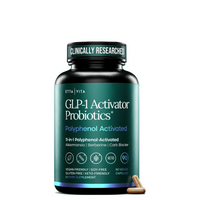
This is why gut health isn't a separate category from supplement efficacy. It plays an important role in how the body processes and absorbs nutrients. Probiotic formulations designed to support the gut environment may contribute to digestive wellness by supporting the intestinal lining and microbial balance. A well-functioning gut also participates in hormonal signaling that influences metabolic processes, which is worth understanding if metabolic function is part of what you're working on. For a closer look at a gut-focused formulation, explore Etta Vita's GLP-1 support supplement, which provides information about its ingredients and intended gut health and metabolic wellness support.
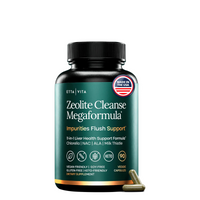
If you're using any product that binds compounds in the gut, the zeolite detox guide explains why those products should be taken at a separate time from your primary nutrient stack to avoid interfering with absorption of other compounds. Etta Vita's full supplement range includes formulations built with these interaction principles in mind, and every order ships free.
Unmanaged Stacking vs. a Transparent, Tested Protocol
| Factor | Unmanaged Stacking | Transparent, Tested Protocol |
|---|---|---|
| Absorption awareness | Compounds taken together without consideration of competition | Synergistic pairs timed deliberately, ideally around meals with dietary fat |
| Ingredient visibility | Active ingredients listed; excipients often hidden | Full disclosure including inactive ingredients |
| Third-party verification | Potency unconfirmed; label taken at face value | Third-party product testing as part of quality assurance |
| Redundancy risk | High; overlapping compounds often invisible across brands | Low; formulations designed with stack context in mind |
| Gut environment | Not considered in protocol design | Foundational to how every other product performs |
| Outcome predictability | Variable; often disappointing despite consistent use | Substantially more consistent over time |
If you want to build a stack where you know what's in each product before it becomes part of your protocol, Etta Vita's supplement collection is built around that standard. All orders ship free, and customer support is available seven days a week if you have questions about what fits your existing protocol.
A Note on Realistic Timelines
Anyone suggesting you'll feel a well-optimized stack working within the first week is selling you the feeling of progress rather than the reality of it. Gut-related changes tend to become noticeable with consistent use over several weeks. Metabolic and energy-related changes often take longer still. The mechanism is real. The timeline requires honesty.
This approach to formulation quality matters most when you're dealing with specific, identified gaps: gut integrity, metabolic function, nutrient depletion from long-term medication use, or a history of taking supplements that simply haven't moved the needle despite genuine effort.
If that describes your situation, you can explore Etta Vita's story and approach to understand what makes the formulations different, or go straight to the product range to find what fits your stack.
Frequently Asked Questions
Can I take all my supplements at the same time to simplify my routine?
You can, but several of them will likely absorb less effectively as a result. Calcium and iron compete for the same intestinal transport channels. Fat-soluble vitamins require dietary fat to absorb properly. Splitting your stack into a morning and evening dose, timed around meals that include some fat, is a small adjustment that meaningfully improves what your body actually absorbs from each product.
How do I know if two supplements I'm taking are working against each other?
Look at whether they share transport mechanisms or metabolic pathways. The clearest signal is minerals that compete for the same intestinal transporters, particularly calcium taken alongside iron at the same time. Fat-soluble vitamins taken without food are another common culprit. If you're unsure about a specific pairing, Etta Vita's support team is available seven days a week to help you think through your stack.
Does taking more supplements automatically mean more benefit?
No. Bioavailability determines benefit, not milligram count. A lower dose of a highly bioavailable form of a compound will outperform a higher dose of a poorly absorbed form. Redundant products in a stack can also push certain nutrients above a useful range without you realizing it, because no individual label flags the overlap with another product you're also taking.
Are there specific supplement pairs that genuinely work better together?
Yes. Vitamin D3 and K2 are a well-established synergistic pair: D3 increases calcium absorption, and K2 directs that calcium toward bone rather than accumulating in soft tissue. Magnesium is required for vitamin D to convert to its active form in the body. Well-designed formulations account for these relationships rather than treating each compound in isolation.
What does third-party testing actually confirm?
Third-party testing verifies the specific attributes included in the tests performed. Depending on the scope of testing, that may include whether active ingredients are present at the stated potency, whether particular contaminants are absent, or whether a product meets defined specifications. Etta Vita incorporates third-party product testing into its quality assurance practices, with testing procedures that may vary by product and production batch. If you have specific questions about a product's testing, customer support is available seven days a week.
Is it safe to take probiotics alongside other supplements?
Generally, yes. Probiotics operate through different mechanisms than vitamins and minerals and don't typically compete for the same absorption pathways. The main consideration worth knowing: any product that binds compounds in the gut should be taken at a separate time from your probiotic and primary nutrient stack, to avoid interfering with absorption across the board.
How do I evaluate whether a supplement company is genuinely transparent?
Look for companies that disclose excipients and inactive ingredients alongside the active compound list, and that can speak to their quality assurance practices with specifics rather than blanket label claims. A company that incorporates third-party product testing and is willing to discuss how that testing works is doing more than most of the market. If a company won't tell you what's in the capsule beyond the highlighted activities, your stack is being built on incomplete information.