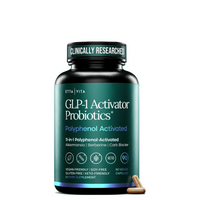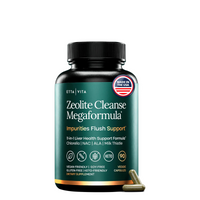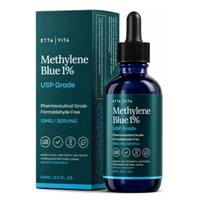
The front panel of a gut health supplement is advertising. The Supplement Facts panel is formulation data. Knowing which is which before you spend a dollar is the single most practical skill in supplement shopping. This guide walks you through exactly what to look for, what to ignore, and where most labels fall short.
Key Takeaways
- The Supplement Facts panel has specific labeling requirements. Other label claims are also subject to applicable regulations, but the Supplement Facts panel is where you find actual formulation data.
- Proprietary blends legally conceal individual ingredient amounts, making effective dose verification impossible without full disclosure.
- CFU count without strain specificity tells you almost nothing about what a probiotic will actually do in your gut.
- Third-party testing is conducted by laboratories operating independently of the manufacturer's internal quality control, even when the manufacturer pays for the testing.
- A batch or lot number helps identify a product's production run
What Does a Gut Health Supplement Label Actually Tell You?
Think of the label as two separate documents sharing the same packaging.
The front panel is where structure/function claims live. Phrases like "supports digestive balance" or "promotes gut flora" fall into a category that doesn't require proof before printing. A small disclaimer noting the FDA hasn't evaluated the statement is required, but it's typically in fine print at the bottom of the bottle.
The Supplement Facts panel is where actual formulation data lives. Every ingredient, the amount per serving, the serving size, and percent daily values where applicable are listed there. That's your starting point every time, before you read anything else on the packaging.
Worth noting: other sections of the label and certain front-panel claims are also subject to applicable regulations. The Supplement Facts panel isn't the only thing regulators care about. But it is where you'll find the ingredient-level specifics you need to evaluate a formulation honestly. If those specifics aren't answered there, nothing on the front panel will fill the gap.
Why Does "Proprietary Blend" Appear So Often, and What Does It Actually Hide?
Proprietary blend is a legal disclosure format that lets a brand group multiple ingredients under one total weight without revealing individual amounts. The combined weight appears on the label. What each ingredient actually contributes does not.
This matters because effective dosing is specific. Well-characterized probiotic strains have documented ranges where they produce measurable effects in the gut. Berberine for metabolic support has been studied at particular dose windows. If an ingredient sits inside a proprietary blend, there's no way to confirm you're receiving a functional amount rather than a trace quantity included for label appeal.
Consider a common scenario: a probiotic formula lists eight strains inside a 200mg proprietary blend. Each strain name sounds research-backed. But distributed across eight ingredients, 200mg means roughly 25mg per strain at most, assuming equal distribution. Delivering a meaningful effect on gut flora composition almost certainly requires more than that. You're paying for a label, not a formulation.
Brands willing to stand behind their products publish individual ingredient amounts openly. That transparency isn't a bonus feature. It's the minimum requirement for verifying whether a product can do what it claims.
Does a Higher CFU Count Actually Mean Better Gut Support?
No, and this point deserves more attention than it gets.
CFU count is the most marketed number in the probiotic category. A higher number sounds like more potency. But CFU count without strain specificity is a figure without biological context, because the strain determines what the probiotic does and where it does it.
Lactobacillus acidophilus and Bifidobacterium longum have different mechanisms of action in the gut. One may be directly relevant to your concern. The other may be irrelevant. A meaningful CFU count of the right strain, delivered in a format that can survive stomach acid exposure, will outperform a much larger CFU count of an unmatched strain that degrades before reaching the colon.
That survivability variable is the part most labels handle poorly. Some probiotic formulas use spore-forming strains, which have a natural protective shell that improves transit through the upper digestive tract. Others rely on specific capsule formats or refrigeration requirements to maintain viable cultures. What matters is whether the label addresses how live cultures survive transit to where they're intended to act. A CFU count tells you what's in the capsule before digestion. It says nothing, on its own, about what arrives where it needs to go.
When you're reading any probiotic label, look for strain-level specificity first, then delivery considerations second. The CFU number is a distant third.
What's the Difference Between "Tested" and "Third-Party Tested"?
The difference is structural, and it matters.
A brand that calls its products "tested" is describing an internal process it controls. Internal quality control is necessary, but it isn't independent verification. The incentive structure is the same as any internal review: the process operates inside the organization whose products it's evaluating.
Third-party testing involves a laboratory operating independently of the manufacturer's internal quality control. Depending on the tests performed, it can help assess ingredient identity, potency, purity, or specific contaminants. The independence is what makes the verification meaningful. A third-party lab's credibility depends on applying its standards rigorously, regardless of who is paying for the service.
It's worth being precise here: manufacturers do pay for third-party testing services, the same way a company pays for an external audit. That payment relationship doesn't automatically compromise the independence of the testing itself, because the laboratory operates separately from the manufacturer's production and quality control systems. What you're verifying is that the organization assessing your product's contents isn't the same one making it.
Third-party testing can help verify specific product quality and safety attributes, depending on the tests performed. Etta Vita incorporates third-party product testing into its quality assurance practices, with some safety testing conducted at the supplier level. That's a quality assurance practice, not simply a front-panel claim.
If a label says "tested for purity" without naming who performed the testing, the testing provider hasn't been identified. That alone doesn't establish whether testing was internal or independent. Identifying the testing laboratory or certifying organization helps buyers evaluate the claim.
A Framework for Evaluating Any Gut Supplement Label
Apply this five-point scorecard when evaluating a new product, comparing two formulations, or auditing what's already in your supplement routine. Score one point for each criterion met:
- Individual ingredient amounts are listed separately, not grouped inside a proprietary blend
- CFU count or active compound percentage is specified per strain or ingredient, not just the ingredient name
- A named third-party testing certification appears on the label (NSF, USP, Informed Sport, or equivalent)
- Serving size and daily dose are clearly stated and logistically realistic
- A batch number or lot number is present, indicating the product can be traced through quality records
A score of four or five means the brand is showing its work. A score of two or below means the label is doing more concealing than revealing.
| What You're Evaluating | Choosing Verified Transparency (Score 4-5) | Accepting Label Opacity (Score 0-2) |
|---|---|---|
| Ingredient amounts | Confirmed doses you can independently check | Unknown amounts with no way to validate |
| Strain or compound specificity | Exactly what's in the capsule is stated | Front-panel claims with no formulation detail |
| Testing source | Laboratory operating independently of the manufacturer | Brand's internal quality control only |
| Batch traceability | Lot number available for product identification | No way to connect your bottle to any test record |
| Formulation confidence | Grounded in verifiable data | Dependent on marketing language |
The difference between those two columns isn't minor. Bioavailability and deliverability are functions of formulation precision. A product that can't be verified can't be trusted to do what it claims, regardless of how prominently the claims appear on the front panel. You can browse Etta Vita's full supplement collection to review available formulations and apply this scorecard when evaluating their ingredient labels and product information.
When Label Literacy Has Real Limits
Reading labels carefully is genuinely worth doing. It's also not a complete solution, and that deserves honesty.
If you're managing a diagnosed gastrointestinal condition, taking prescription medications, or are pregnant, label literacy is a starting point rather than a substitute for guidance from a qualified healthcare provider. Supplement and drug interactions can carry real clinical significance, and some of those interactions aren't predictable from label reading alone. Certain supplements affect the same metabolic pathways as medications, and the combined effect isn't always additive or predictable from reading each label in isolation.
Label transparency also can't tell you how your individual microbiome will respond to a specific strain or formulation. Two people taking the same probiotic can have genuinely different outcomes because gut composition varies considerably between individuals. The label tells you what's in the product. It can't tell you what your specific gut needs.
The Etta Vita health guides offer additional context on approaching formulation decisions relative to specific wellness goals, working as a useful complement to label literacy rather than a replacement for personalized guidance.
FAQ
How do I know if a probiotic strain will actually survive to reach my gut?
Look for language addressing how live cultures are protected through stomach acid exposure. Spore-forming strains have structural properties that support transit through the upper digestive tract without degrading. If the label doesn't address survivability at all, the CFU count reflects what's in the product before digestion, not what reaches the colon.
What does "clinically studied ingredients" actually mean on a supplement label?
It means at least one ingredient in the formula has appeared in clinical research. It doesn't confirm the formula itself was tested as a combination, or that the dose in the product matches what was used in the study. Check whether the specific amount aligns with documented dose ranges, not just whether the ingredient name appears on both the label and in a research summary.
Can I take a probiotic and a digestive enzyme supplement at the same time?
Generally yes, but timing affects results. Digestive enzymes work on food during active digestion and are typically most effective taken with meals. Many probiotics perform better away from an active enzymatic environment. Read the timing instructions on each product separately and follow them as written rather than defaulting to the same window for everything.
Why do some gut supplements list "other ingredients" and what should I check for?
The "other ingredients" section covers fillers, binders, capsule materials, and flow agents used in manufacturing. Some people are sensitive to specific additives. If you have known sensitivities, scan this section before purchasing. A shorter "other ingredients" list typically reflects a cleaner manufacturing process.
Is a higher price always a sign of a better gut supplement?
Not automatically, but price often reflects real production cost differences. A product using well-characterized probiotic strains with documented survivability, manufactured to certification standards, and independently verified costs more to produce than one without those elements. The relevant question isn't whether the price is high. It's whether you can verify what you're paying for.
How do I distinguish real third-party testing from an internal quality claim?
Third-party certification should name the certifying organization, not just the phrase "third-party tested." NSF International, USP, and Informed Sport are independently operated with public standards. If a label says "tested for purity" without naming who performed the testing, that's an internal claim, not independent verification.
What's the fastest way to confirm a brand's transparency claims?
Look for three things: a third-party certification from a named independent laboratory, a batch or lot number for product identification and traceability, and individual ingredient amounts rather than proprietary blend groupings. If all three are present, the brand is demonstrating transparency through documentation. If none are, front-panel claims have no verifiable backing.
The label you read carefully earns your trust or loses it on its own terms. Start with the Supplement Facts panel, apply the scorecard, and let the documentation tell you what the front panel can't.
Ready to apply this framework to a formulation already built around verifiable ingredient transparency? Browse Etta Vita's current supplement lineup and reach out if you have questions about any formulation. Customer support is available seven days a week, and free delivery is included on every order.